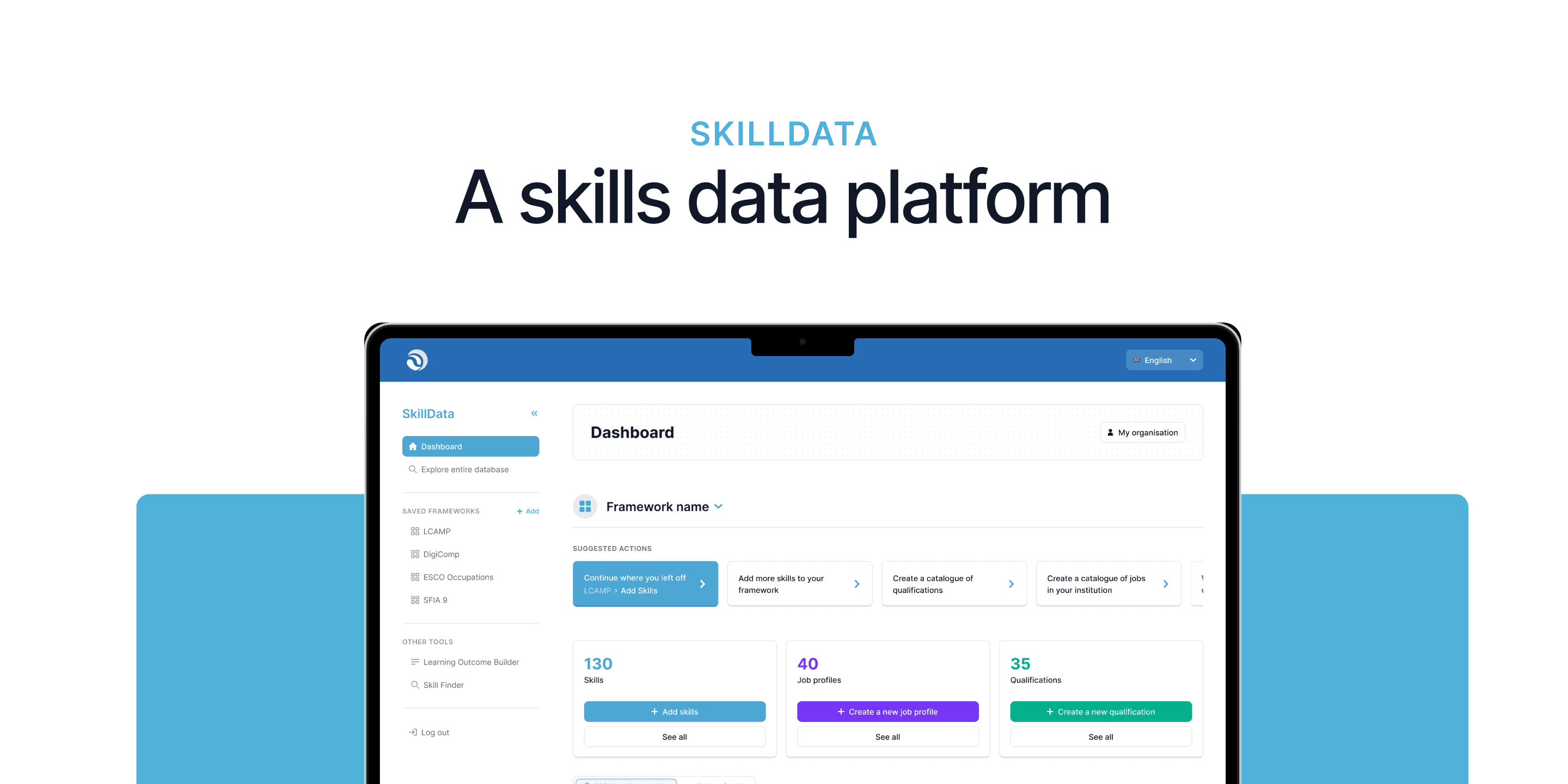
SkillData
From skill frameworks to workforce intelligence
June 2024 - Ongoing
Key outcomes
• Designed the full platform from scratch across two major surfaces (admin and learner) • Currently leading a full design audit and component rebuild to future-proof the system • Presented the learner portal at MCMC 2026 in Amsterdam, sparking interest from an Austrian university requesting beta access • Built for the LCAMP EU project with broader commercial ambitions
The Problem
The ESCO skills framework has nearly 14,000 skills, but it can't cover every sector's specific needs. Organisations in manufacturing, healthcare, or higher education often need custom frameworks that mix standard ESCO skills with their own domain-specific ones. And once you have a framework, you need to actually do something with it: define qualifications, map job profiles, assess learners against it.
When I joined this project, the brief was simple: build a tool where users can create a custom skill framework and visualise it. Two years later, Skilldata is a full skills intelligence platform covering framework creation, qualification building, job profile mapping, and a learner assessment portal powered by AI matching. That evolution, from a small tool to a complex multi-surface platform, became the defining design challenge of the project.
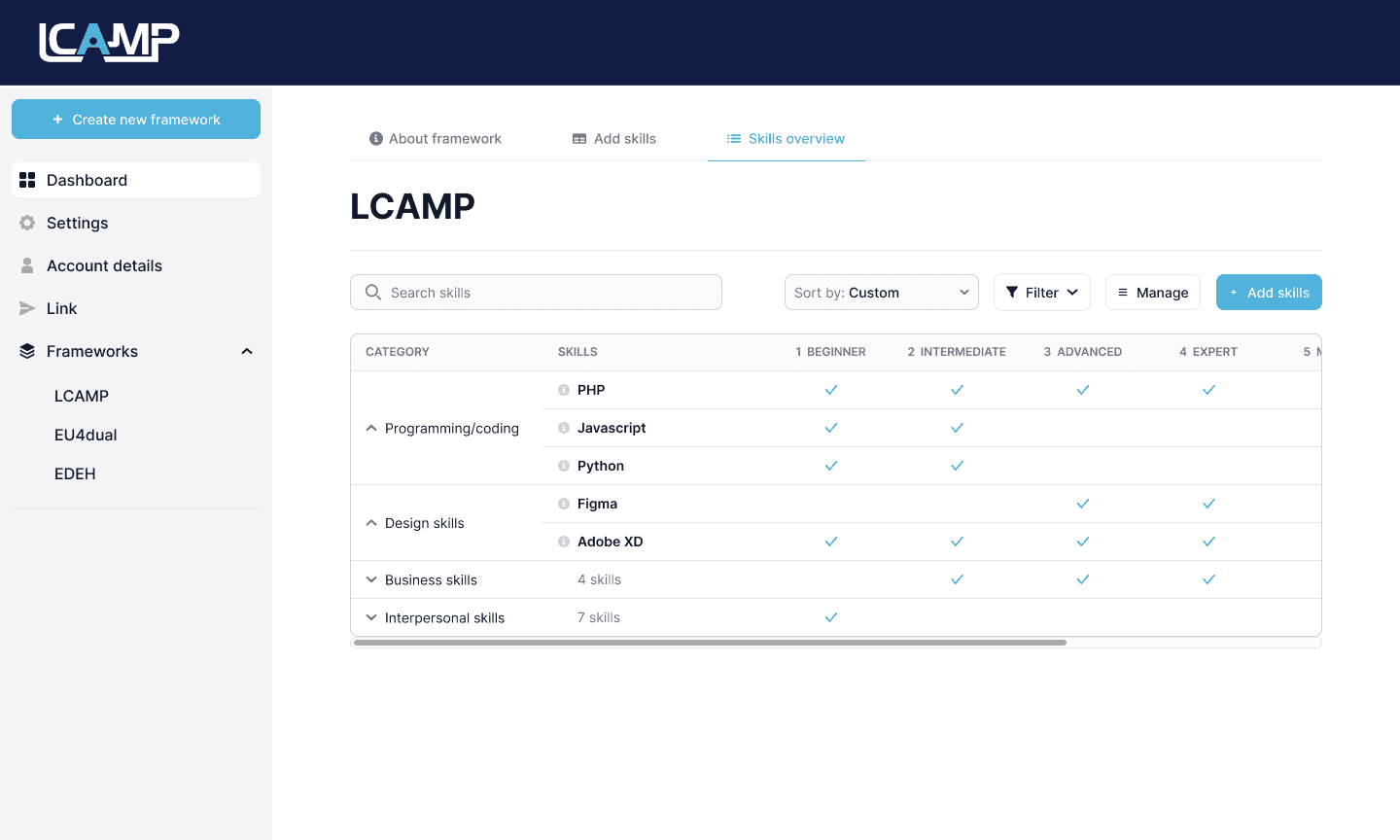
The very first version of the skills table
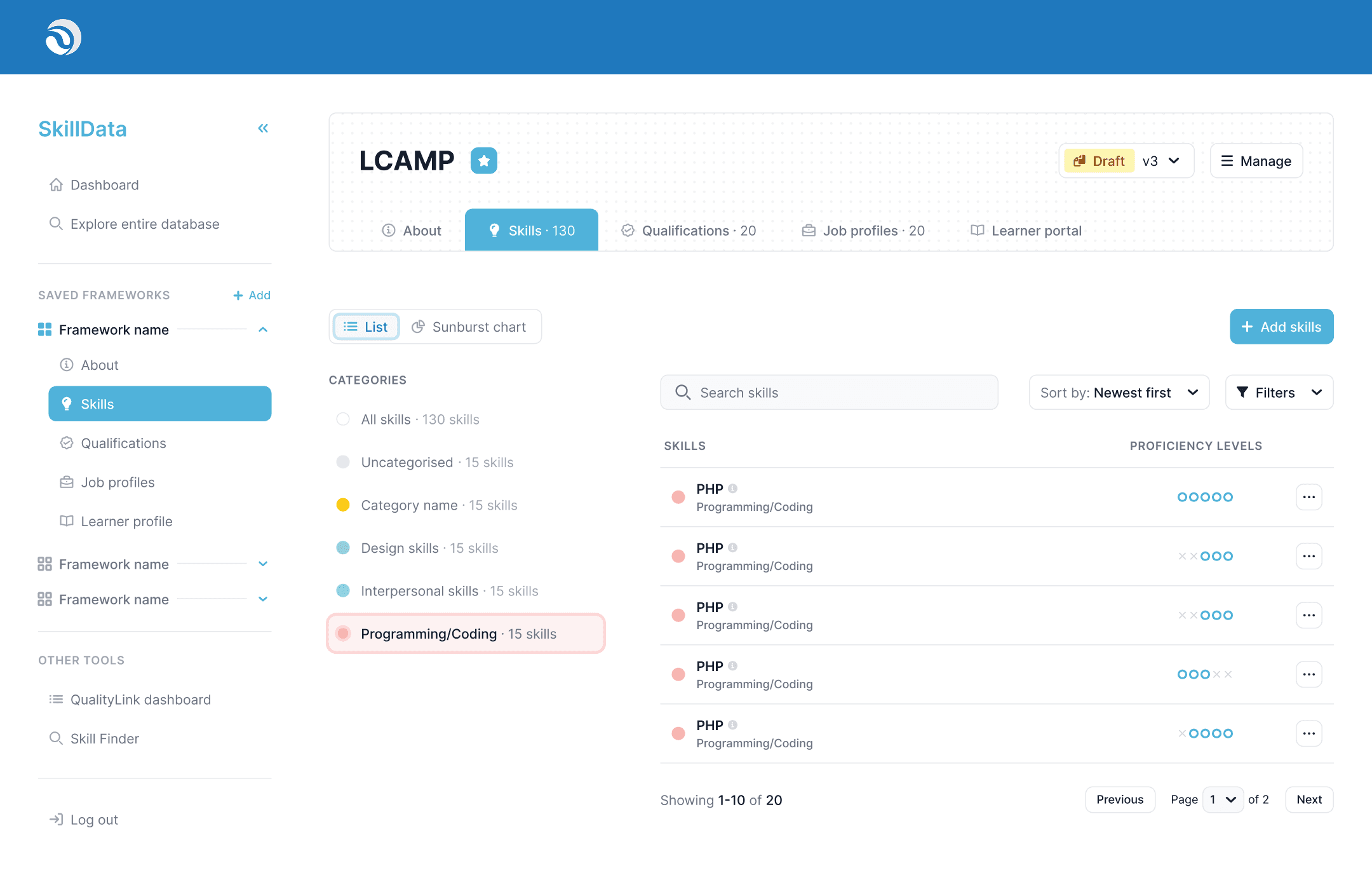
The latest version of the skills table
My Approach
Starting simple and layering complexity
The initial tool was straightforward: create a framework, add skills, view them in a sunburst chart or table. As new features were added one by one (proficiency levels, qualifications, job profiles, the learner portal), I had to repeatedly judge when the existing structure could absorb a new feature and when a more fundamental redesign was needed. For example, adding navigation via a sidebar became necessary once the tool outgrew its original single-page feel, but timing that structural change was a judgment call.
Making proficiency levels manageable
Frameworks can have up to 10 proficiency levels. Each level has a general description, and each skill has its own description per level (explaining what a person should be able to do at that level of that skill). Displaying all of this without overwhelming the user required careful progressive disclosure: showing the right amount of detail at each layer, letting users drill in rather than seeing everything at once.
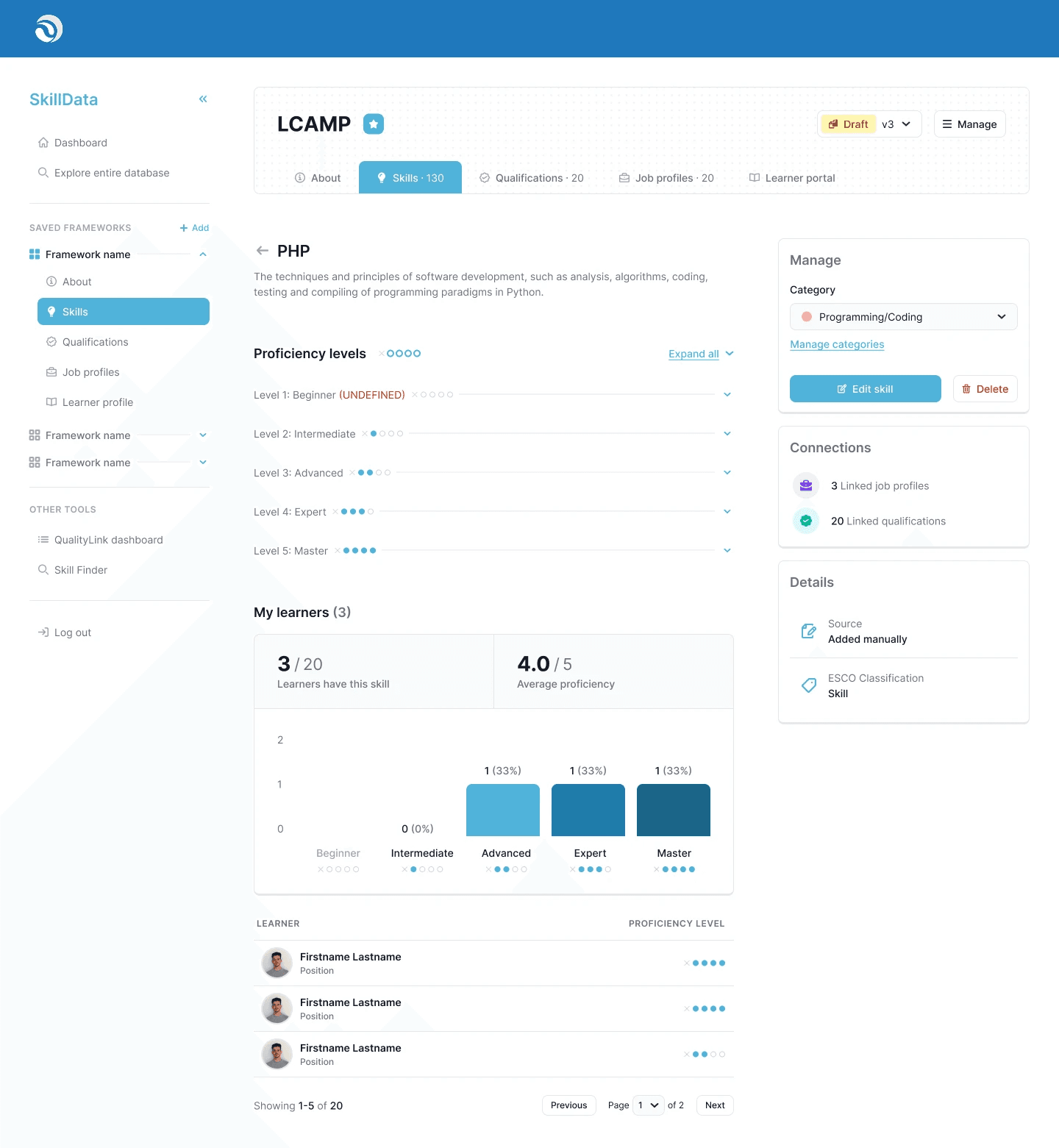
Page displayi
Handling a combinatorial explosion of states
One of the less visible challenges is how many screen variations exist based on framework settings. Does the framework have proficiency levels on or off? How many levels? Are skill categories enabled? Is the framework private or public? Draft or published? Many screens change meaningfully based on these toggles, and keeping the Figma file coherent across all permutations was a constant effort.
Building the learner portal
The second major surface is the learner-facing side. Organisations send learners (employees, students) a link, and the learner goes through a guided flow: indicating interests, career goals, uploading CVs or credentials, then getting AI-matched to skills from the framework. They can self-assess where the AI got it wrong. The result is a profile showing which qualifications they meet, which job profiles they're suited for, and where upskilling would get them closer to a target role.
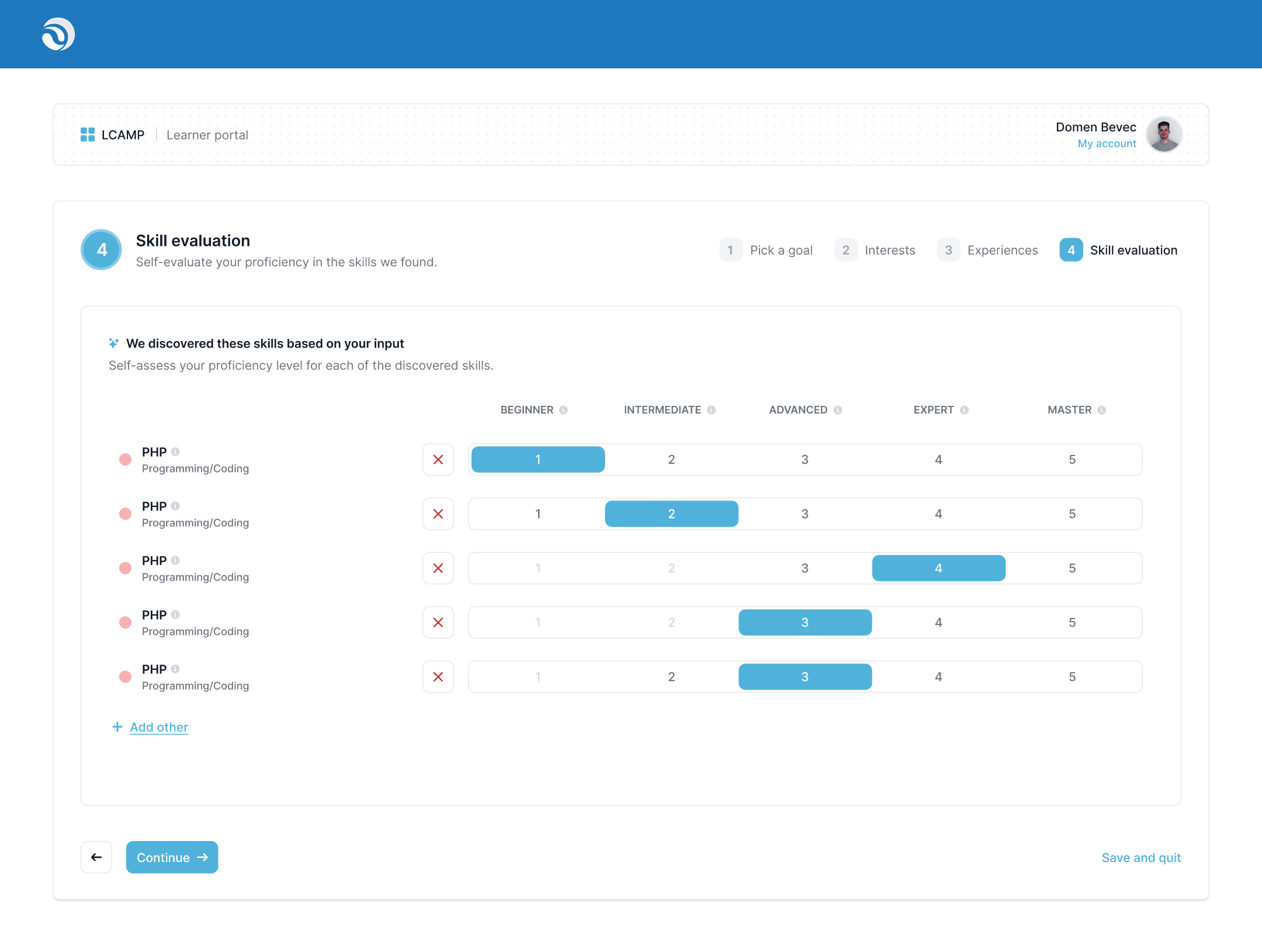
Part of the learner's flow where they review the AI's assessment of their skills
The Solution
Skilldata has two main surfaces:
The admin platform
The admin platform is where organisations build and manage everything. They create a skill framework (or import an existing one like ESCO or SFIA), populate it with skills and proficiency levels, then use those skills as building blocks to define qualifications ("this qualification means you know these skills at these levels") and job profiles ("this role requires these qualifications and these individual skills at these levels"). The framework, with all its contents, can be exported in machine-readable Rich Skill Descriptor format.
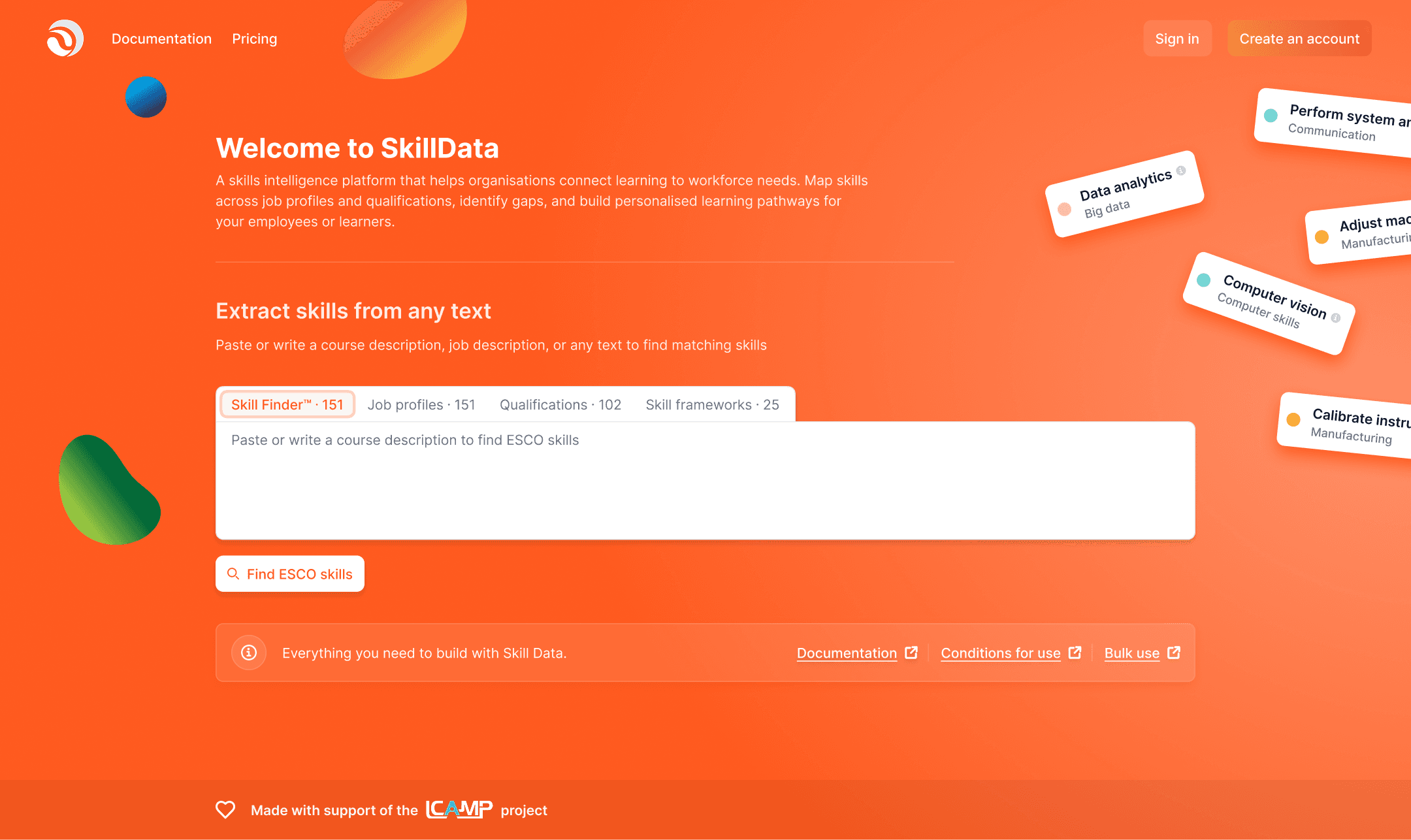
The Skilldata landing page, where our entire database is browsable for non-signed in users
The learner portal
The learner portal is the user-facing side. Learners go through a guided assessment, get matched to the framework's skills via AI, self-assess to correct anything, and receive a view of where they stand: what they're qualified for, what's within reach, and what they'd need to upskill.
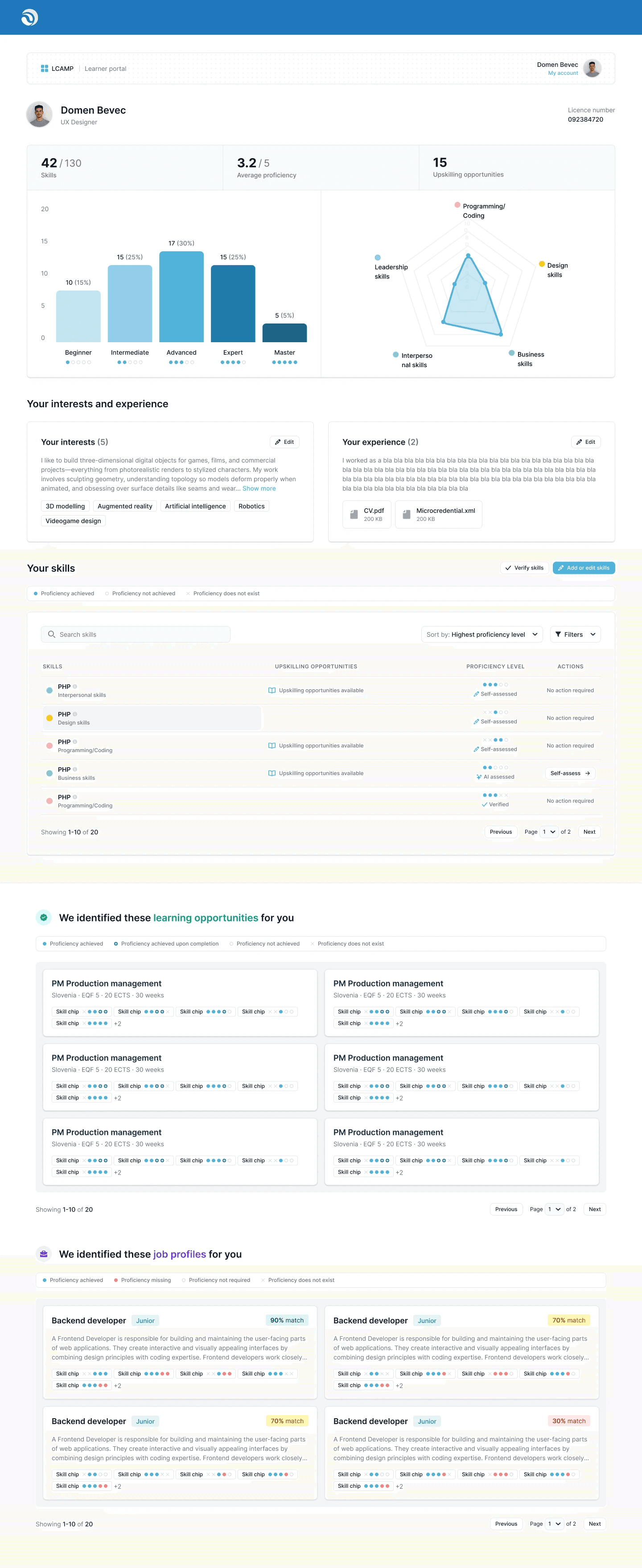
The Learner Portal dashboard
The Outcome
Skilldata is live and in use by the LCAMP project for tracking qualifications and job profiles in advanced manufacturing, with their learner rollout upcoming. After presenting the learner portal at MCMC 2026 in Amsterdam, a professor from an Austrian university requested beta access to test the learner platform with students.
The biggest ongoing outcome is the design audit I'm currently leading: rebuilding the entire tool with a proper component system, redesigning outdated flows and screens, running multiple QA cycles with the developer (annotating mismatches, fixing bugs, iterating until pixel-perfect), and creating a more maintainable foundation for the features still to come. The learner portal is the first surface to complete this process.
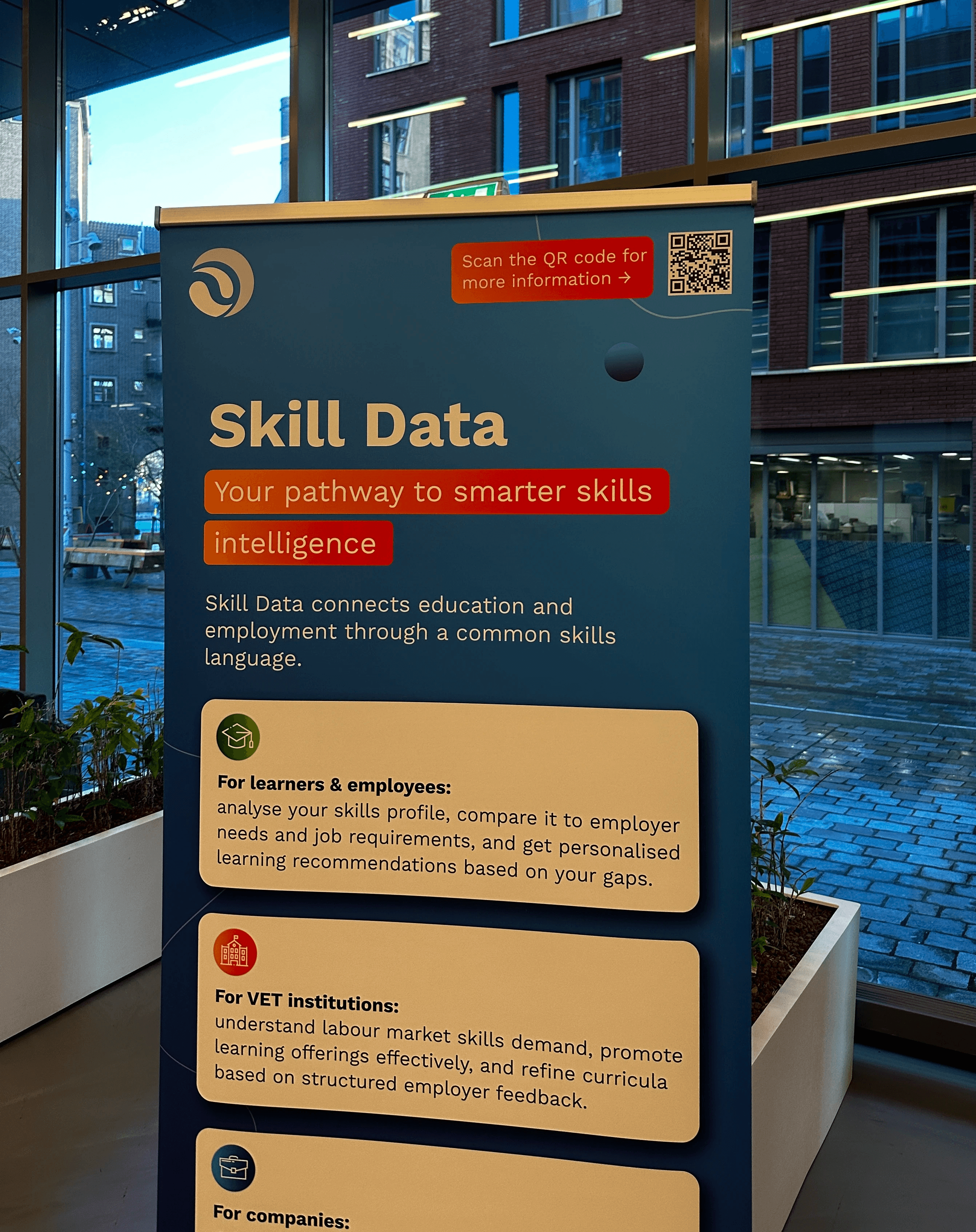
The Skilldata booth at MCMC 26 in Amsterdam