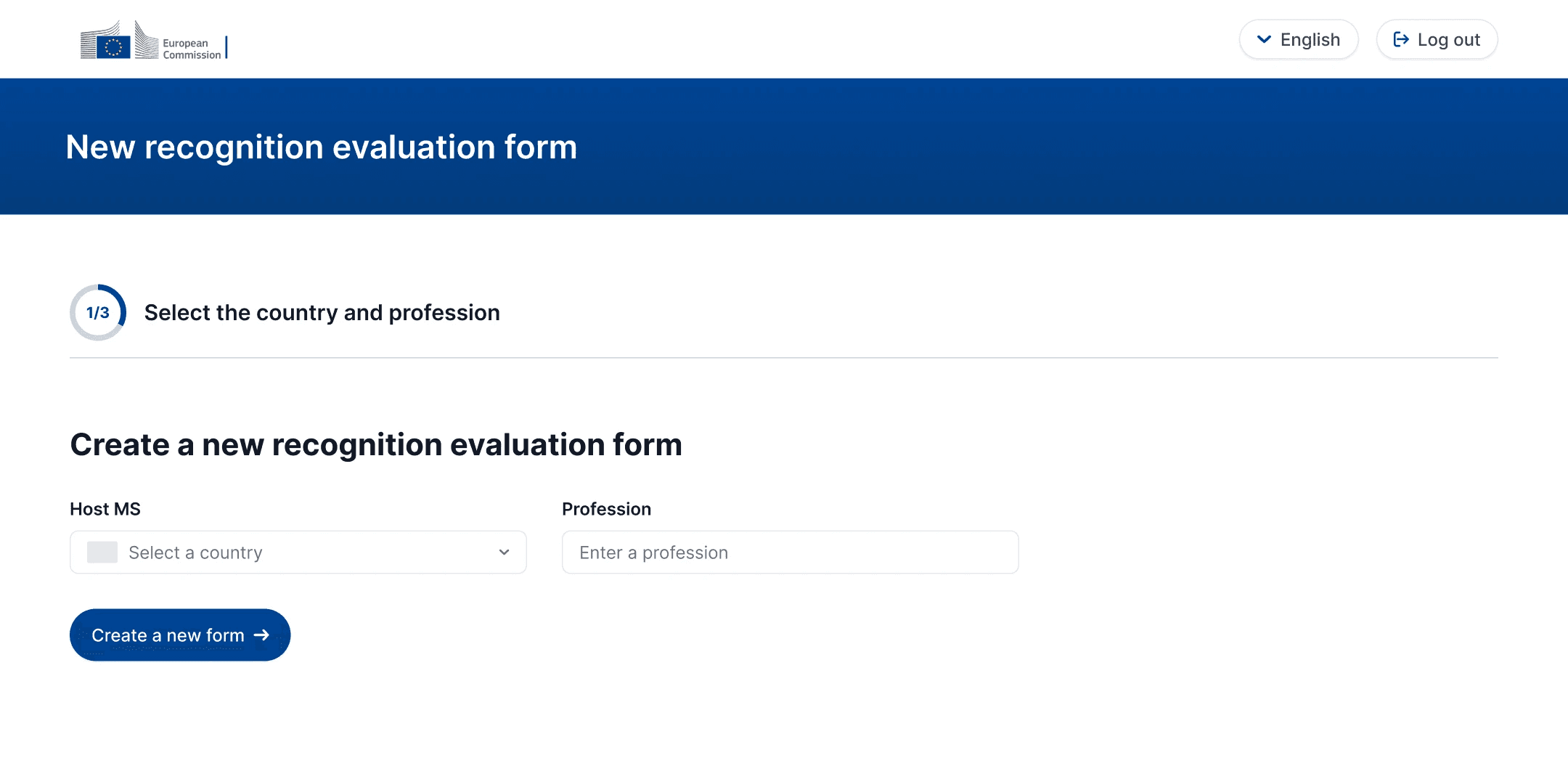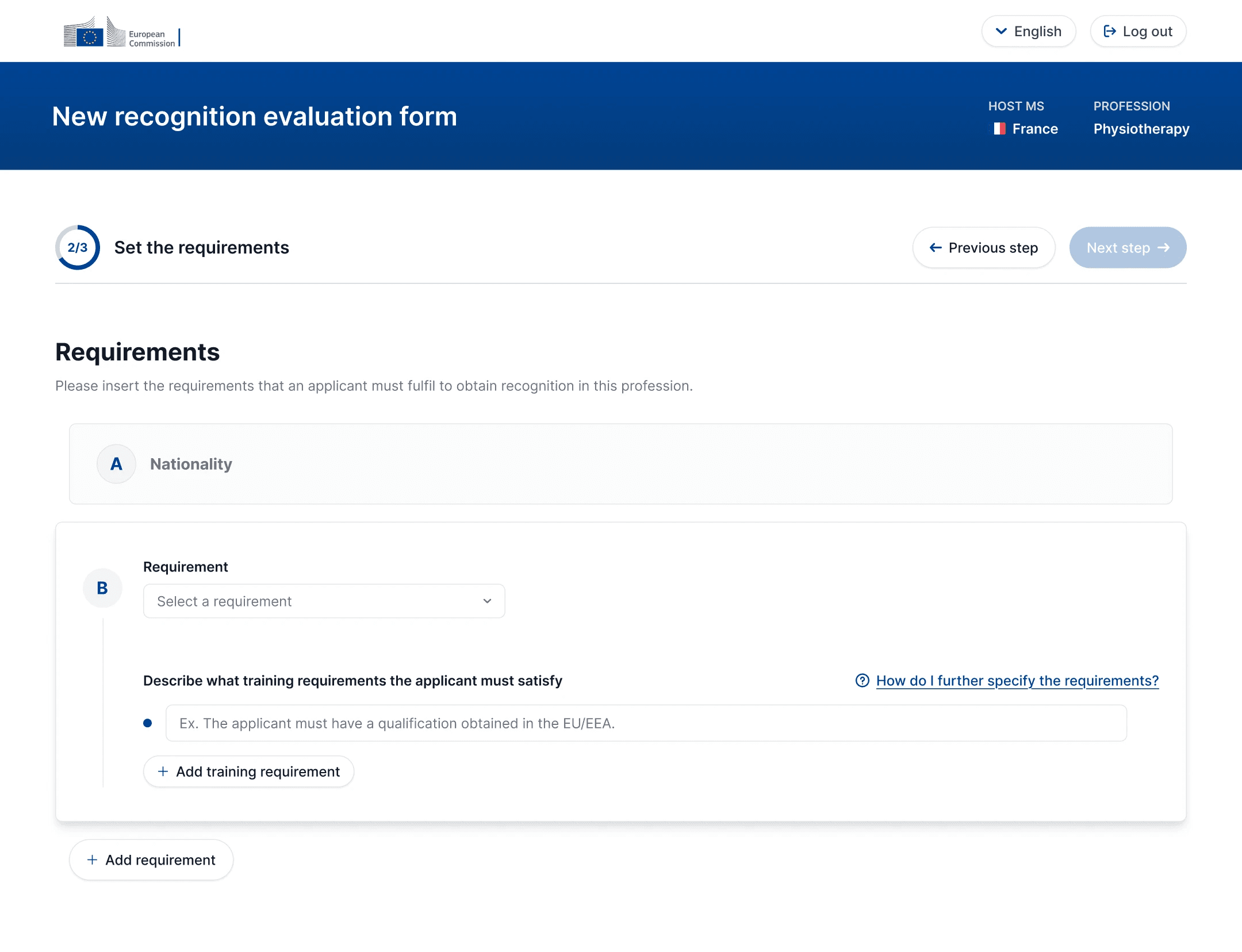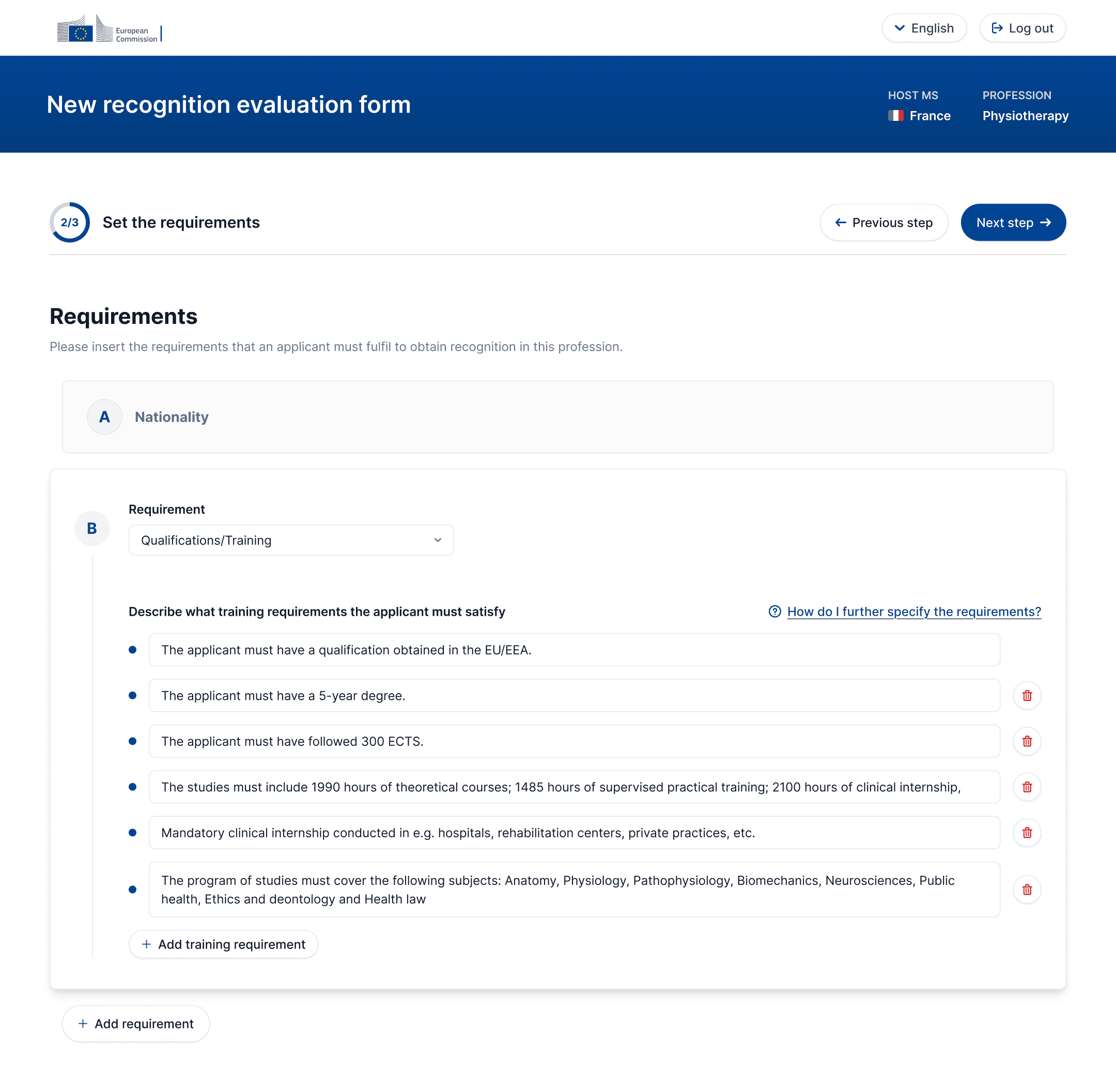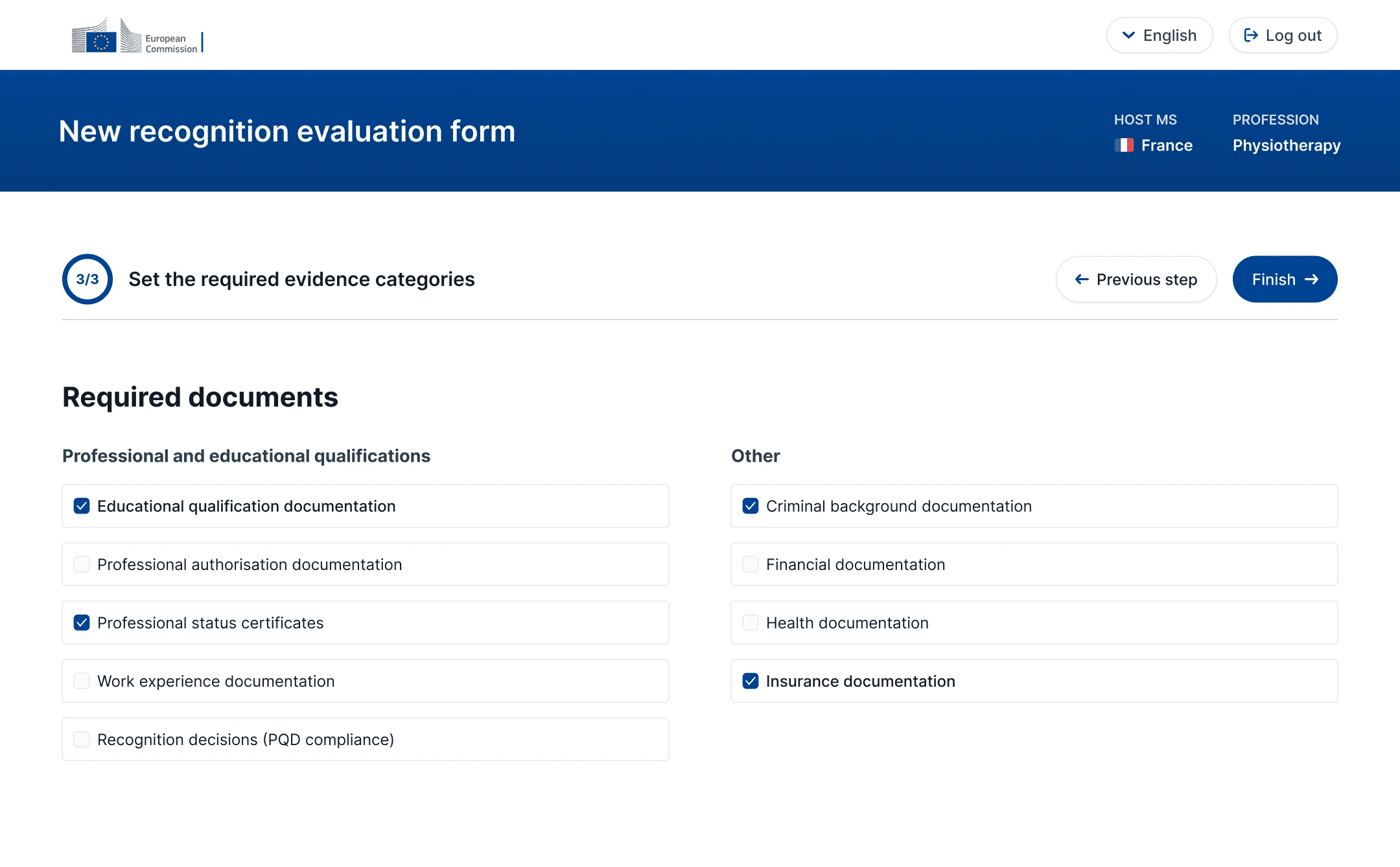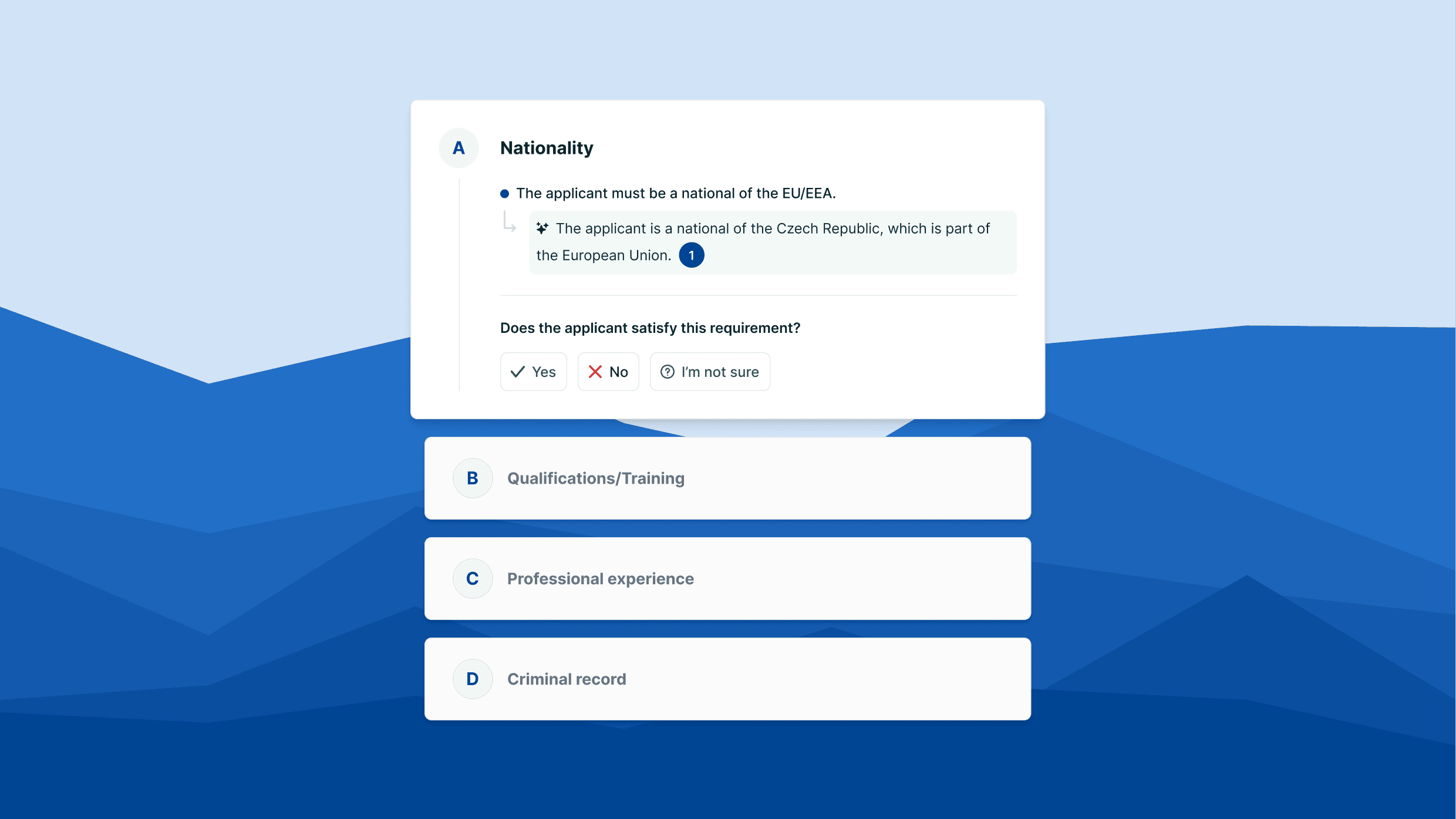
AI Qualification Recognition PoC
A proof of concept for digitising professional qualification recognition across the EU
April 2025 - July 2025
Key outcomes
• 9.4/10 client satisfaction score from the European Commission • Proof of concept validated through user testing with competent authorities across multiple countries • Concept now informing ongoing EC policy work on digitalising the Professional Qualifications Directive
The Problem
If you're a nurse in Romania and you want to work in Germany, you need your professional qualifications recognised by the German authorities. This process is governed by an EU directive from 2005, and it's a mess. Applicants struggle with fragmented information spread across multiple portals, unclear document requirements, and months of waiting. On the other side, competent authorities (the government bodies that evaluate these applications) do most of their work manually: checking document authenticity by hand, comparing qualifications case by case, emailing applicants about missing paperwork.
The European Commission wanted to know: could digital tools, including AI, make this process faster and more consistent? NTT DATA was contracted to develop a vision and proof of concept. They brought in my boss for his policy expertise on qualifications frameworks, and he brought me along to handle the design work, because the project needed someone who could iterate quickly and constantly rather than a designer who'd bill for 20 minutes of review.
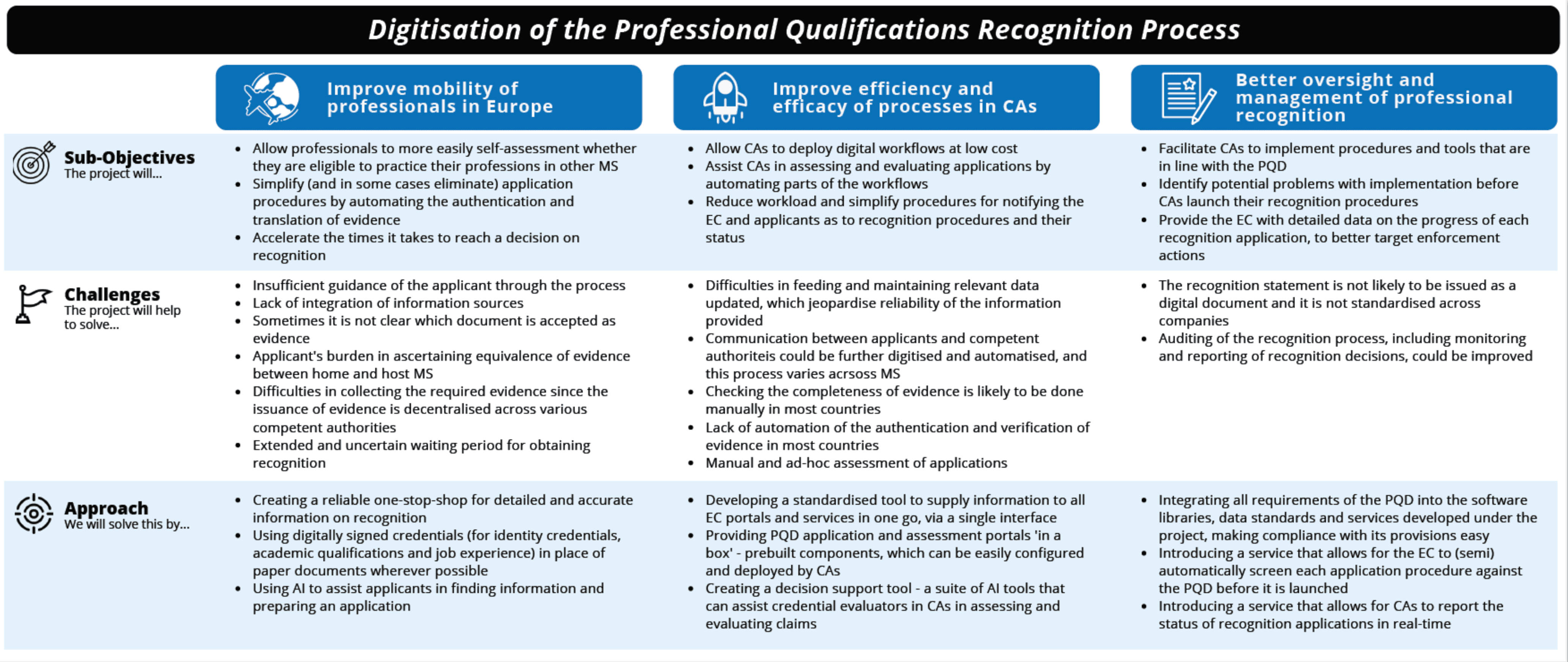
Summary diagram from the project's vision document
My Approach
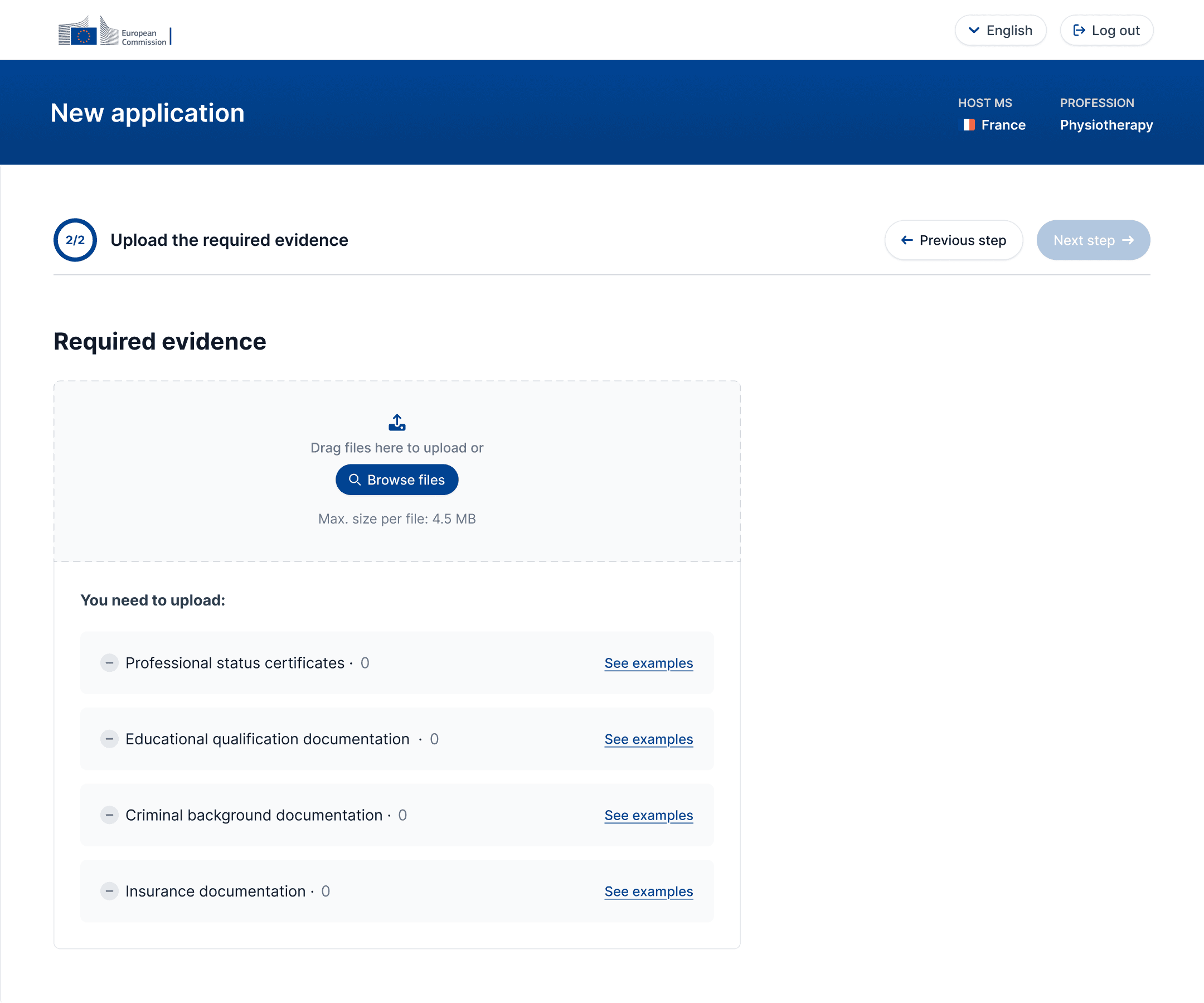
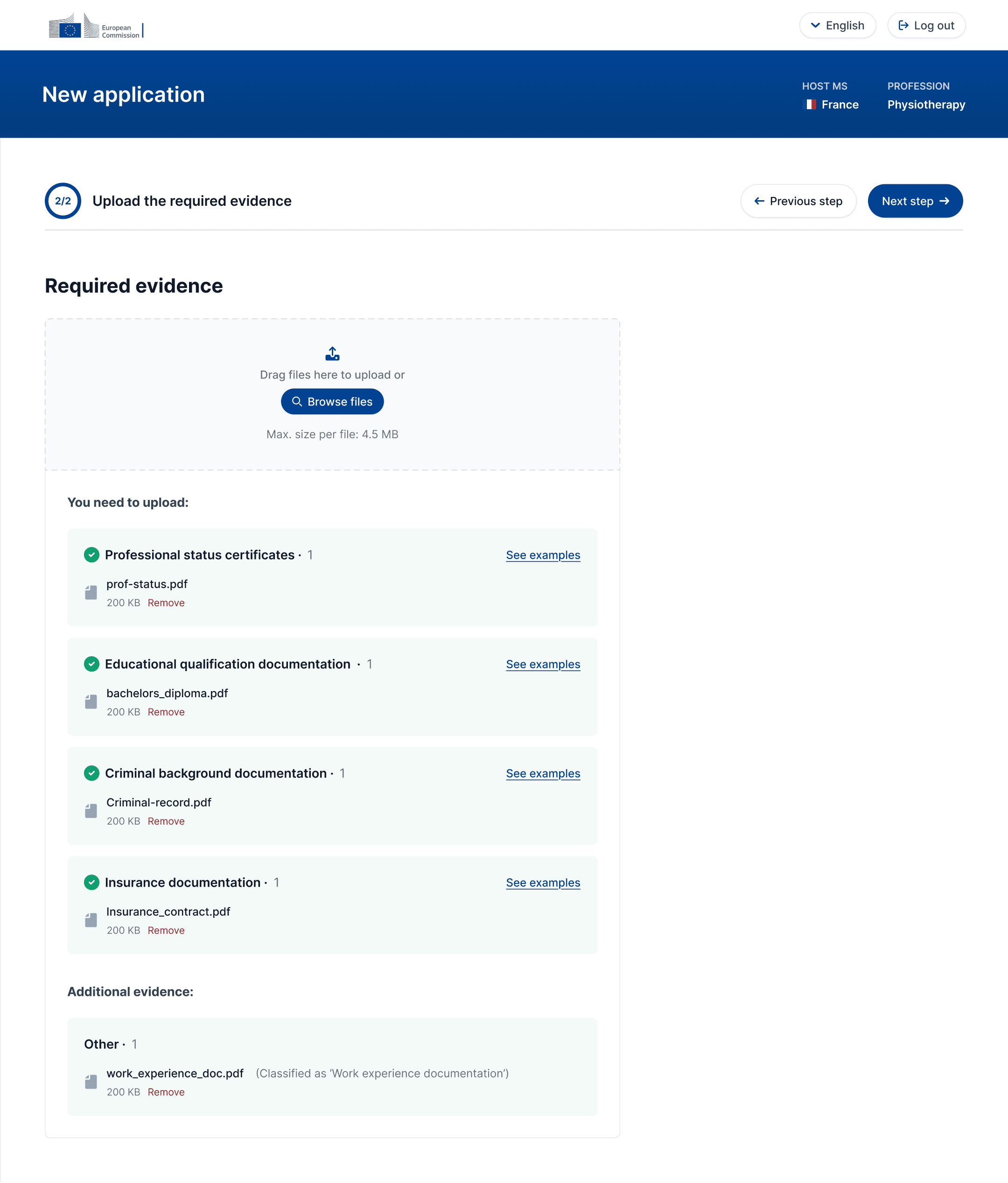
The vision document proposed five components: a one-stop information shop for applicants, standardised digital credentials, trusted registers of regulated professions, an interoperability layer connecting national systems, and an AI-powered decision support tool for competent authorities. My job was to turn all of this into a clickable prototype that the Commission could evaluate and test.
Iterating through uncertainty
The actual number of screens in the final prototype is modest. What made the project intensive was the sheer volume of iterations. The team was simultaneously working through policy constraints (what's legally possible), technical constraints (what AI can realistically do), and UX constraints (what competent authorities would actually use). My role was to keep visualising each new direction as the team talked through it, so decisions could be made against something concrete rather than in the abstract. My boss later told me this was the biggest value I brought to the project.
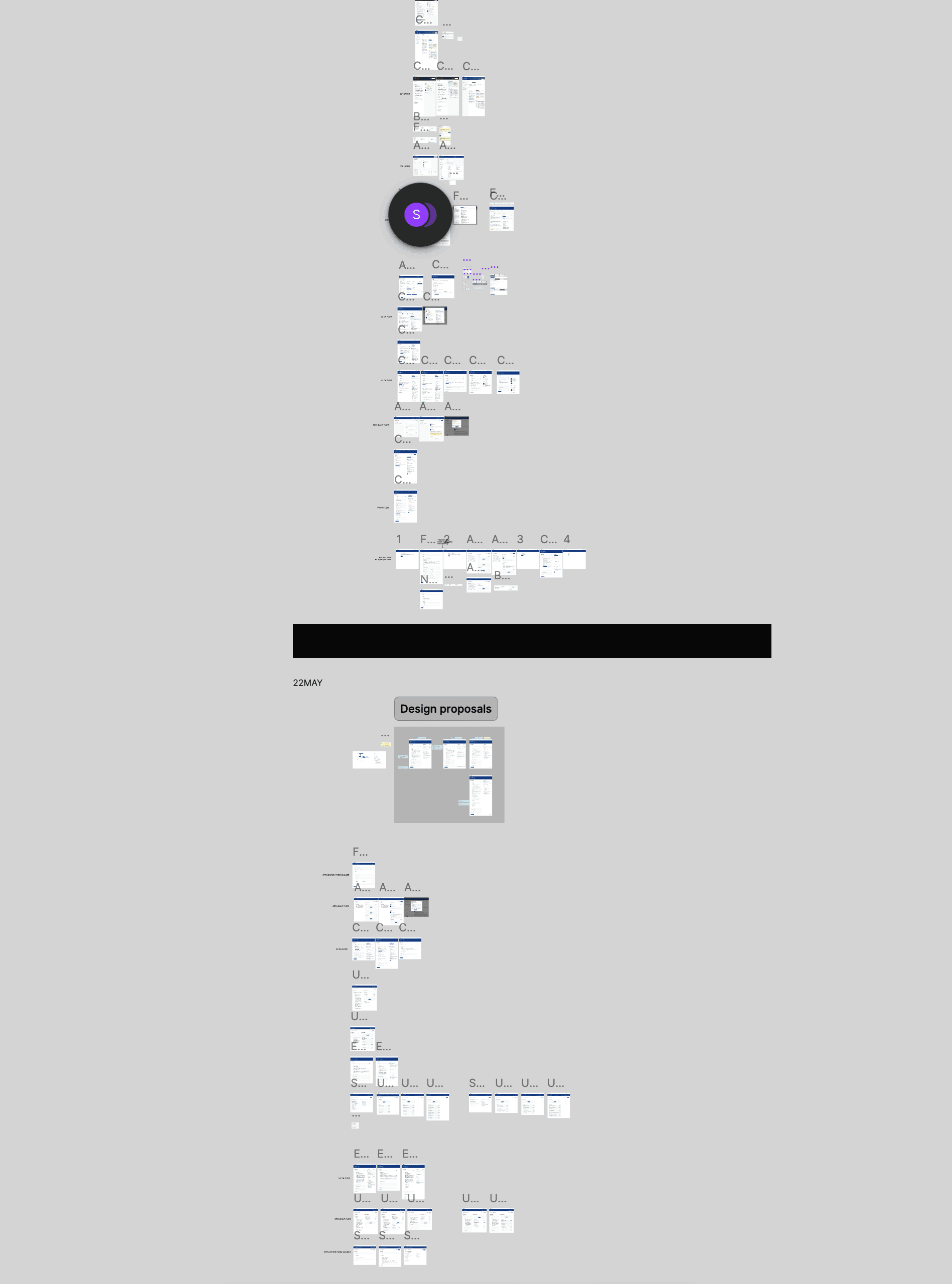
The many iterations of the project
Three design tensions that shaped the prototype
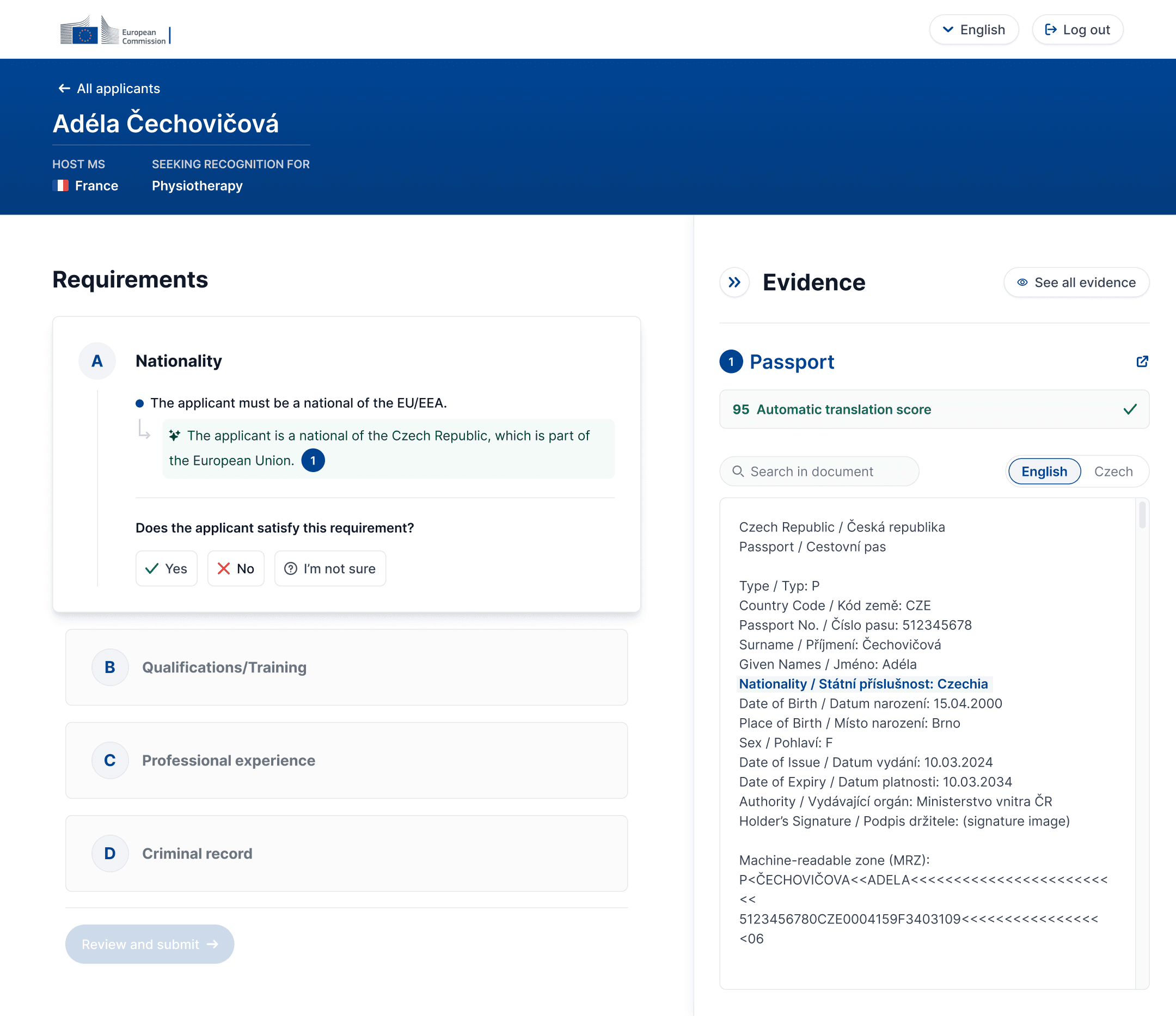
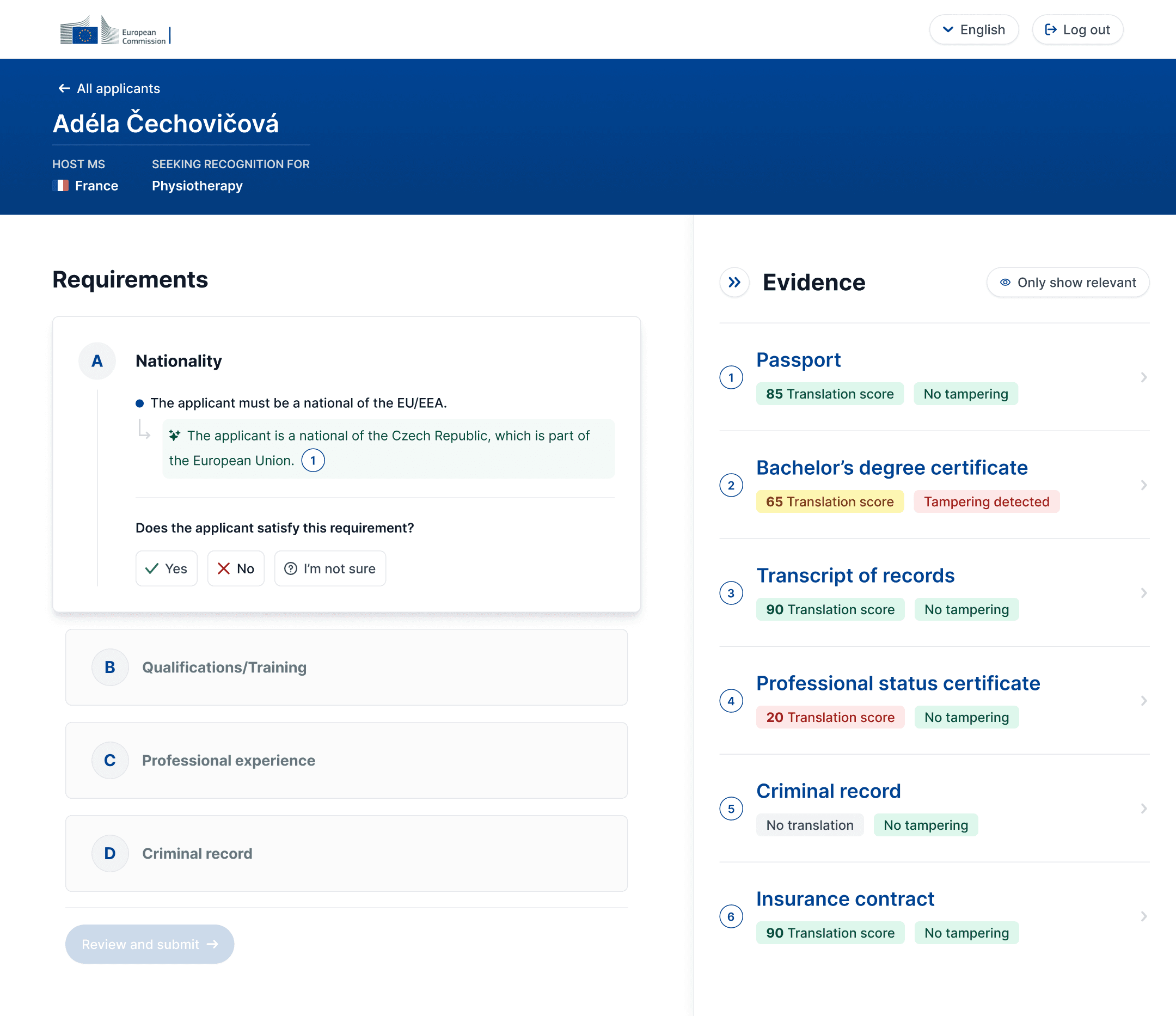
The first was whether a competent authority reviewing an application should see everything at once or step through requirements one by one. We went with a guided step-by-step flow, since the evaluation criteria vary by profession and recognition system, and dumping it all on screen would overwhelm reviewers who might only process a handful of applications per year.
The second was how strongly to let the AI guide the evaluator's hand. We drew a parallel to Google's NotebookLM: the AI presents its assessment of whether each condition is met, with direct references to the specific text in the applicant's uploaded evidence that supports that conclusion. The evaluator can agree, disagree, or dig deeper. The AI never makes the decision; it just does the legwork of reading and highlighting.
The third was the constant tension between giving evaluators enough information to make a well-informed decision and not burying them in data. Every iteration involved trimming, restructuring, or progressive-disclosing information to keep the interface manageable.
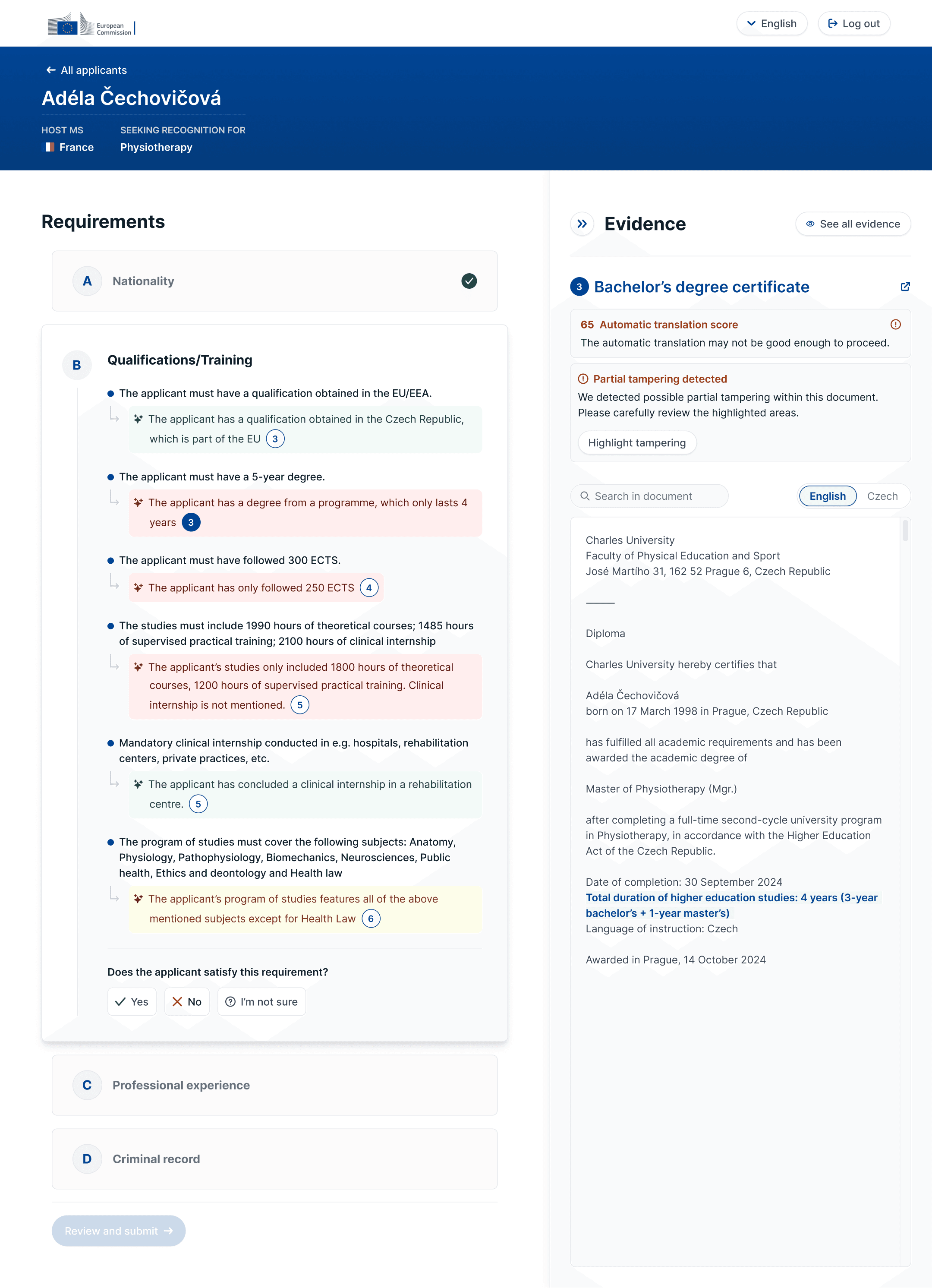
Screen for evaluating applicants as a competent authority
The Outcome
The proof of concept was coded into a working tool and tested with competent authorities from multiple EU countries and professions. They were asked whether this kind of tool would help them in their day-to-day work, and the response was overwhelmingly positive. The European Commission gave the project a 9.4 out of 10 satisfaction score.
Since this was a proof of concept, the project itself is complete. But the idea is moving forward. In February 2026, the Commission published an implementation report on the Professional Qualifications Directive with a public consultation open on digitalisation of the recognition process. The vision and components we prototyped are directly reflected in the policy direction being discussed.
Screenshots